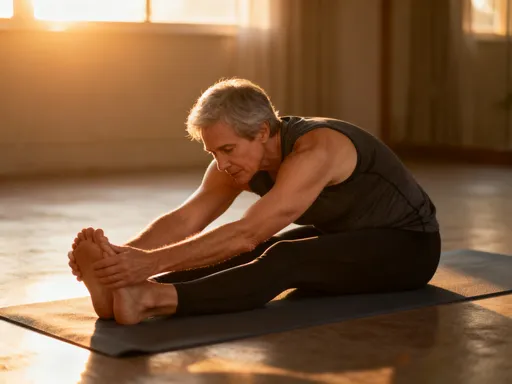
How I Gained Real Flexibility Fast—And Why It Changed Everything
Flexibility isn’t just for yogis or athletes—it’s a basic part of staying mobile, preventing injury, and feeling good in your body every day. I used to think stretching was boring and pointless, until I started experiencing stiffness, soreness, and limits in simple movements. That’s when I dug into quick, science-backed flexibility training. What I discovered surprised me: small, smart efforts made a noticeable difference faster than I expected. This is about how flexibility became a non-negotiable part of my health awareness—and how it can for you, too.
The Hidden Problem: Why Most People Ignore Flexibility
Many people assume that flexibility is only important for dancers, gymnasts, or elite athletes—something reserved for those who can twist their bodies into complex poses. This widespread misconception leads millions to overlook one of the most accessible and impactful aspects of physical wellness. The truth is, flexibility plays a vital role in everyday life, influencing how easily you can tie your shoes, reach for an item on a high shelf, or simply turn your head while driving. When flexibility declines, so does functional independence, often without immediate warning.
Modern lifestyles significantly contribute to declining flexibility. Most adults spend hours each day sitting—at desks, in cars, or on couches—leading to chronically tight hips, hamstrings, and shoulders. This sedentary pattern shortens muscles over time, particularly the hip flexors and chest muscles, while weakening their opposing muscle groups. As a result, posture deteriorates, movement becomes restricted, and the body compensates in ways that increase the risk of strain. A 2020 review published in the Journal of Aging and Physical Activity found that reduced range of motion in major joints begins as early as the third decade of life, accelerating after age 40 if not addressed.
Early signs of poor flexibility are often dismissed as normal aging or fatigue. These include morning stiffness, discomfort when standing up after sitting, and difficulty bending forward to touch your toes. Some may experience tightness in the lower back or shoulders, frequent muscle cramps, or a feeling of heaviness in the limbs. While these symptoms may seem minor, they are signals that the body’s connective tissues are losing elasticity. Ignoring them can lead to more serious issues, such as joint degeneration, muscle imbalances, and increased susceptibility to injuries during routine activities like lifting groceries or gardening.
What many fail to recognize is that flexibility is directly linked to long-term joint health. Joints rely on surrounding muscles and tendons to move smoothly and safely. When these tissues are stiff, they place uneven stress on the joints, increasing wear and tear over time. Maintaining adequate flexibility helps preserve joint lubrication, supports proper alignment, and reduces the likelihood of conditions such as osteoarthritis. Additionally, improved flexibility enhances balance and coordination, which are critical for fall prevention—especially important for women over 50, who face higher risks of bone-related injuries. Flexibility, therefore, is not a luxury; it is a foundational element of sustainable health.
What Flexibility Really Is (And What It Isn’t)
At its core, flexibility refers to the ability of muscles, tendons, and other soft tissues to lengthen safely through a full range of motion. It is not about how far you can stretch or whether you can perform advanced poses; rather, it is about having the functional capacity to move your body freely and without restriction. This distinction is crucial because it shifts the focus from performance to practicality. A flexible body allows for easier movement during daily tasks, reduces strain on the musculoskeletal system, and supports overall physical resilience.
There are different types of flexibility, each serving a unique purpose. Static flexibility involves holding a stretch in a fixed position for a period—like reaching forward and holding a seated forward bend. This type is commonly used in recovery and cool-down routines to improve muscle length over time. Dynamic flexibility, on the other hand, involves controlled movements that take joints and muscles through their full range, such as leg swings or arm circles. It is especially beneficial before physical activity, as it prepares the body for motion by increasing blood flow and neuromuscular activation. Functional flexibility bridges the gap between the two, emphasizing movement patterns that mimic real-life actions, such as squatting, twisting, or reaching overhead.
Despite growing awareness, several myths about flexibility persist. One of the most common is the belief that only naturally “bendy” people can benefit from stretching. In reality, flexibility is a trainable quality, much like strength or endurance. Genetics do play a role in baseline range of motion, but consistent practice can lead to meaningful improvements at any age. Another misconception is that flexibility requires hours of stretching or specialized training. The truth is, even short, daily efforts can produce noticeable changes in just a few weeks. Research from the American Council on Exercise indicates that holding stretches for 15–30 seconds, repeated 2–4 times per session, can lead to measurable gains in muscle extensibility.
It is also important to understand that flexibility is not an isolated goal but a component of overall fitness. Physical health is built on multiple pillars: cardiovascular endurance, muscular strength, body composition, and mobility. Flexibility supports all of these by enhancing movement efficiency, reducing fatigue, and lowering the risk of injury. For example, tight hamstrings can limit stride length during walking or running, forcing other muscles to compensate and increasing the chance of strain. Similarly, restricted shoulder mobility can affect posture and make lifting or carrying more difficult. By integrating flexibility into a well-rounded routine, individuals create a stronger foundation for lifelong activity and vitality.
Why Quick Flexibility Training Works—The Science Simplified
One of the most encouraging findings in modern exercise science is that flexibility can improve rapidly with minimal time investment. Contrary to the belief that stretching must be lengthy or intense, research shows that short, consistent sessions are often more effective than infrequent, prolonged ones. The key lies in the nervous system’s role in muscle control. Muscles are not just passive tissues—they are regulated by neural signals that determine how much they can lengthen. When you stretch regularly, your nervous system learns to tolerate greater muscle extension, reducing the protective tension that causes stiffness.
This process is rooted in neuroplasticity—the brain’s ability to adapt and rewire based on repeated experiences. Just as learning a new skill strengthens neural pathways, regular stretching teaches the body to allow safer, deeper movement over time. A study published in the Scandinavian Journal of Medicine & Science in Sports demonstrated that participants who performed just five minutes of daily stretching for six weeks experienced significant improvements in hamstring and calf flexibility. The gains were comparable to those in a group that stretched for 30 minutes twice a week, highlighting the power of frequency over duration.
Another factor contributing to fast results is the body’s response to consistent stimuli. Muscles and connective tissues respond best to gentle, repeated loading rather than aggressive pulling. When stretching is done daily, even for a few minutes, the tissues undergo micro-adaptations that gradually increase their elasticity. This is similar to how bones strengthen with weight-bearing activity—the body adapts to the demands placed upon it. Importantly, these changes occur without requiring extreme effort or discomfort. In fact, pushing too hard can trigger the stretch reflex, a protective mechanism that causes muscles to contract and resist lengthening, counteracting progress.
Time efficiency is a major advantage of quick flexibility training, making it highly accessible for busy adults. For women managing households, careers, or caregiving responsibilities, finding an extra hour for exercise can feel impossible. However, integrating five to ten minutes of targeted stretching into existing routines—such as after brushing teeth or before bedtime—requires no special equipment or schedule overhaul. The cumulative effect of these small efforts leads to meaningful improvements in posture, comfort, and movement ease. Over time, many report reduced back pain, better sleep quality, and increased confidence in physical ability. The science is clear: consistency, not intensity, is the driving force behind lasting flexibility gains.
My Go-To Routine: A Real-World, 7-Minute Flexibility Practice
After experimenting with various stretching methods, I developed a simple, seven-minute routine that targets the major muscle groups most affected by daily inactivity. This practice requires no equipment, can be done at home, and fits easily into morning or evening rituals. It combines dynamic movements to warm up the body and static holds to improve muscle length, focusing on areas commonly tight in sedentary individuals: the hamstrings, hips, shoulders, and spine. The entire sequence flows smoothly, allowing for a mindful transition between movements.
The routine begins with one minute of dynamic stretches. Start with arm circles—30 seconds forward and 30 seconds backward—to loosen the shoulders and upper back. Follow this with leg swings: hold onto a wall or chair and swing one leg forward and back for 30 seconds, then switch sides. This activates the hip flexors and hamstrings while increasing circulation. Next, perform cat-cow stretches on the floor or a mat. Move slowly through five to six repetitions, arching the back on the inhale and rounding it on the exhale. This gently mobilizes the spine and engages the core.
The second phase includes static holds, each lasting 30 seconds. Begin with a seated forward fold: sit with legs extended, inhale to lengthen the spine, and exhale to hinge forward from the hips. Keep the back straight and avoid rounding; go only as far as comfortable. This stretch targets the hamstrings and lower back. Then transition to a figure-four stretch while lying on your back—cross one ankle over the opposite knee and gently pull the uncrossed leg toward your chest. This opens the glutes and hips, areas often tight from sitting. Repeat on the other side.
For the shoulders, perform a cross-body arm stretch: bring one arm across your chest and use the opposite hand to gently press it closer. Hold for 30 seconds per side. Finally, end with a gentle spinal twist—lie on your back, bend your knees, and let them fall to one side while keeping your shoulders grounded. Turn your head in the opposite direction and hold for 30 seconds, then switch. This releases tension in the lower back and improves spinal rotation. The entire routine takes just seven minutes but delivers a full-body release that many describe as instantly calming and restorative.
Modifications are available for different fitness levels. If floor movements are challenging, seated versions can be used—such as a seated spinal twist or a chair-based forward lean. Those with limited mobility can perform arm circles and shoulder rolls while standing. The key is to maintain proper alignment and avoid forcing movement. Over time, as flexibility improves, individuals may find they can deepen the stretches naturally. Practicing this routine in the morning helps wake up the body, while doing it at night supports relaxation and better sleep. Many users report feeling looser within the first week, with continued progress over time.
When and How to Stretch—Timing Matters More Than You Think
Understanding when to stretch is just as important as knowing how. Different types of stretching serve different purposes depending on the time of day and physical activity level. For example, dynamic stretching is ideal before exercise or movement, as it prepares the muscles and joints for action. Static stretching, on the other hand, is more effective after physical activity or at the end of the day, when muscles are warm and pliable. Misunderstanding this timing can reduce benefits or even increase injury risk.
Pre-activity stretching should focus on movement-based techniques. Cold muscles are less elastic and more prone to strain, so static stretching on a cold body is generally not recommended. Instead, dynamic movements like leg swings, arm circles, or torso rotations increase blood flow, raise muscle temperature, and enhance neuromuscular coordination. These prepare the body for physical demands without overstretching. A 2014 study in the Journal of Strength and Conditioning Research found that dynamic warm-ups improved performance in strength and endurance tasks, while static stretching beforehand had a neutral or slightly negative effect.
Post-activity or evening stretching is the optimal time for static holds. After exercise, muscles are warm, and connective tissues are more responsive to lengthening. Holding stretches for 15–30 seconds allows the nervous system to relax and accept greater range of motion. This is also an excellent time to incorporate breathing techniques—inhaling deeply before a stretch and exhaling slowly as you ease into it. Controlled breathing activates the parasympathetic nervous system, promoting relaxation and reducing muscle tension. This combination not only improves flexibility but also supports mental calmness, making it a powerful tool for stress management.
Another effective strategy is integrating micro-stretches throughout the day, especially after prolonged sitting. Every hour, take one to two minutes to stand, stretch your arms overhead, roll your shoulders, or perform a quick forward bend. These brief movements counteract the shortening effects of sitting and prevent stiffness from accumulating. Pairing stretches with daily habits—like stretching after using the restroom or before checking email—helps build consistency. Over time, these small actions become automatic, contributing to sustained flexibility without requiring dedicated workout time.
Beyond Stretching: Lifestyle Tweaks That Support Flexibility
While stretching is essential, it is only one part of a larger picture. True flexibility is supported by overall health habits, including hydration, sleep, and movement variety. Muscles are composed of approximately 75% water, and even mild dehydration can reduce elasticity and increase stiffness. Drinking adequate water throughout the day helps maintain tissue pliability and supports nutrient delivery to muscles. A general guideline is to consume half your body weight in ounces daily—for example, a 150-pound person should aim for about 75 ounces of water.
Sleep plays a crucial role in muscle recovery and nervous system regulation. During deep sleep, the body repairs tissues, balances hormones, and resets neural pathways involved in movement control. Poor sleep can heighten muscle tension and reduce pain tolerance, making stretching feel more difficult. Prioritizing seven to eight hours of quality sleep each night enhances the body’s ability to adapt to flexibility training. Creating a calming bedtime routine—such as reading, gentle stretching, or mindful breathing—can improve sleep quality and support long-term progress.
Regular low-impact movement also complements flexibility work. Activities like walking, swimming, or cycling promote circulation and joint lubrication, helping muscles stay supple. Unlike high-intensity workouts that may tighten certain muscle groups, these exercises encourage balanced, full-body motion. Walking, in particular, engages the hips, legs, and spine in natural, rhythmic patterns that support mobility. Incorporating a 20- to 30-minute walk into the daily routine can significantly enhance the effects of stretching.
Equally important is avoiding overstretching or forcing progress. Flexibility gains are gradual, and pushing too hard can lead to micro-tears, inflammation, or joint instability. The goal is not to achieve extreme ranges but to move with ease and comfort. Listening to your body’s signals—such as sharp pain, joint discomfort, or persistent soreness—is essential. If pain occurs, stop and consult a healthcare professional. Consistency, patience, and gentle effort yield better long-term results than intensity. Over months, many women report not only improved flexibility but also greater body awareness, reduced stress, and a renewed sense of physical confidence.
Making Flexibility Part of Your Health Mindset
Flexibility should not be viewed as an optional add-on but as a vital component of overall health, equal in importance to strength and cardiovascular fitness. Shifting this mindset transforms stretching from a chore into an act of self-care—a daily commitment to bodily well-being. Just as brushing your teeth prevents dental problems, regular flexibility practice helps prevent physical decline. It is an investment in future mobility, comfort, and independence.
Many who adopt a consistent routine begin to notice subtle but meaningful changes. They may find it easier to bend down, stand up, or carry household items. Some report improved sleep, reduced tension headaches, or a greater sense of calm. These benefits reinforce the habit, creating a positive feedback loop. Tracking progress doesn’t require measurements or photos—simply paying attention to how your body feels during everyday movements can reveal improvement.
It’s important to remember that individual results vary. Age, activity level, and previous injuries all influence flexibility. The goal is not comparison but personal progress. Some days will feel better than others, and that is normal. What matters is showing up consistently and treating the body with kindness. If discomfort arises, adjusting the routine or seeking guidance from a physical therapist ensures safety and sustainability.
Ultimately, flexibility is about more than physical ability—it’s about cultivating a deeper connection with your body. It encourages mindfulness, patience, and respect for natural limits. As women navigate the demands of daily life, this practice offers a quiet space to pause, breathe, and honor their physical selves. By making flexibility a non-negotiable part of health awareness, anyone can build a stronger, more resilient foundation for the years ahead.
Flexibility training doesn’t have to be time-consuming or intimidating. By understanding its real value and building small, smart habits, anyone can improve their range of motion and daily comfort. More than just physical change, it’s about tuning into your body and making health awareness a living practice. Start where you are—your future self will thank you.